
This month, we sat down with Deb, founder of Don't Trash Dover, to learn how eight years of showing...
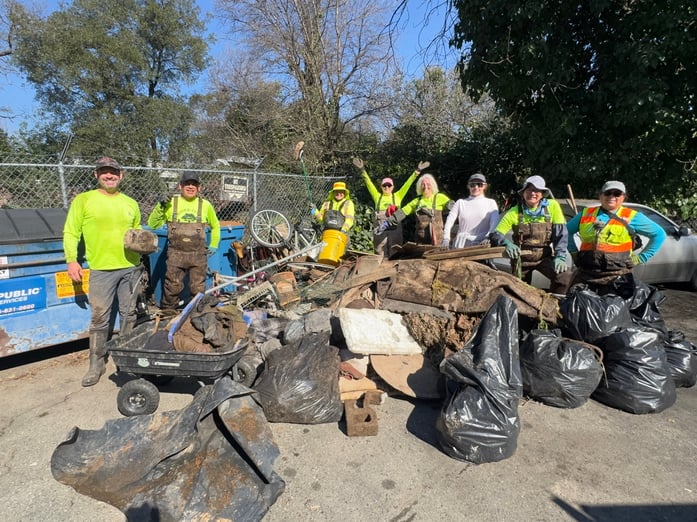
This month we sat down with Kathleen Ford, Co-Founder and Treasurer of the River City Waterway Alliance, to learn how a group of neighbors picking up trash during the pandemic grew into one of the most impactful environmental organizations in Sacramento, California.
Tell us about the River City Waterway Alliance and how it got started.
It started during the pandemic. There was a real surge of trash in Sacramento around that time. Disposable items, takeout containers, reduced city services. I started picking up trash in my own neighborhood, and through social media I found other people who felt the same way. We started meeting up, organizing events, and it all grew very organically.
One person in our early group was really focused on the Sacramento River specifically, and that got us looking more closely at the waterways. We realized that's where the need was greatest. The rivers and creeks were kind of a no man's land. Nobody was responsible for them, and the environmental impact of all that trash near the water was significant.
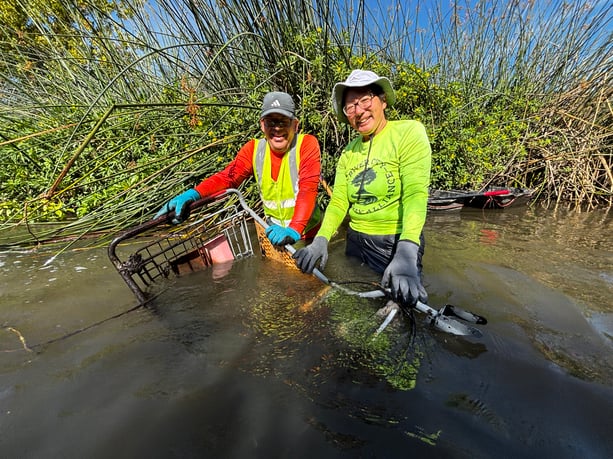
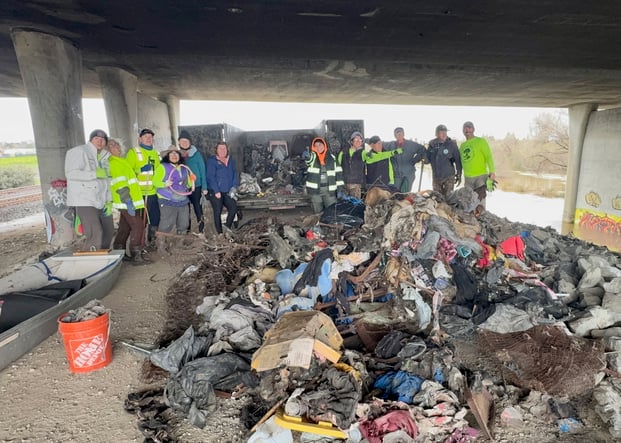
In 2023 we officially launched the River City Waterway Alliance. We already had a solid core of volunteers and established relationships with public agencies, so when we launched, we hit the ground running. In just over three years, we've picked up 3.9 million pounds of trash, over 28,000 syringes, over 1,800 tires and as many shopping carts. We've held over 1,000 events and we run four or five every single week.
Those weight numbers come from actual scale measurements at city and county waste transfer facilities, or from informed estimates based on dumpster volume and average weights for the types of debris we collect. With experience from more than a thousand events, RCWA leadership has developed a high degree of accuracy in these estimations.
That's an extraordinary amount of activity for an all-volunteer organization. What keeps people coming back?
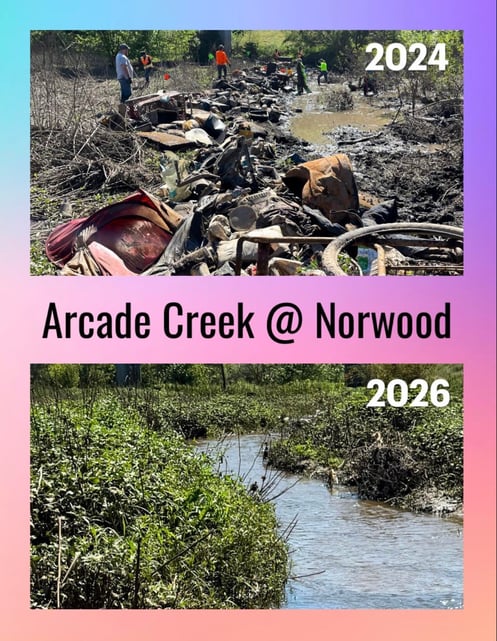
It checks a lot of boxes. There's a real sense of purpose. You can volunteer for a lot of things and wonder if it actually made a difference, but with cleanup work, you see it. You see the before and the after. There's nothing quite like looking at a pile at the end of the day and knowing you did that.
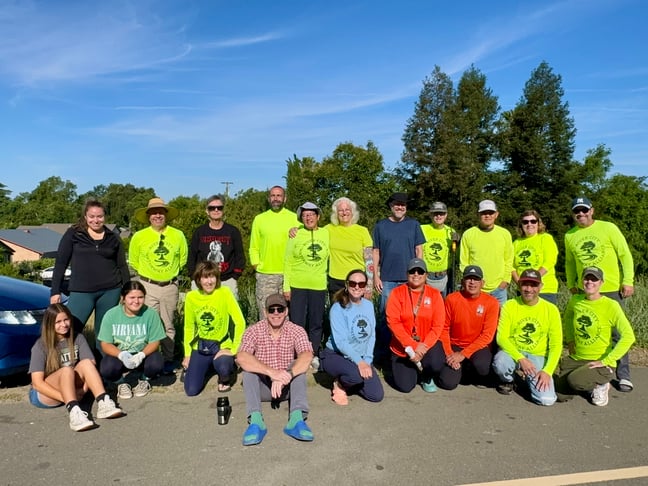
You're also outside, you're getting exercise, you're making friends with genuinely good people. It's gotten to a point where we try to cancel an event when it's pouring rain or 105 degrees, and people still show up. It's addictive, honestly. That tangible before-and-after is a big part of it.
Have you seen real changes in the areas you've cleaned?
Absolutely. Some of the transformations are just unbelievable. We've worked areas where there was no birdsong at all, just this noticeable absence of life. Now when we go back, we see egrets and herons, nests in the trees, wildlife returning to these spots. We see more people walking their dogs and riding bikes along the levees because instead of looking down into a creek full of garbage, they're seeing the natural environment. That's hard to put a number on, but there's no question it's happening.
We've also seen public agencies step up once an area is cleaned. Especially on the American River Parkway, once we cleared certain stretches, the county committed to keeping them clear. So it's not just a one-time cleanup. It creates momentum.
What misconceptions do people have about joining a cleanup event?
That it's too hard or too dangerous. Don’t get me wrong, some of it is physically demanding. We move mattresses, furniture, really heavy things. But there is something for everyone. If someone wants to walk the levee pushing a rolling magnet to collect nails, that's valuable. If they want to tie off bags or take photos, that matters too. We really try to make sure people don't feel intimidated by the harder stuff they might see in a video. Every little bit counts.
What safety tips do you share with first-time volunteers?
Come dressed appropriately. Long sleeves, long pants, boots if you have them, good gloves. We provide gloves on site. The biggest safety concern is needles. We tell volunteers to never pick them up by hand. We make sure everyone has access to a grabber and we have special containers for disposal. We've also pulled out somewhere north of 28,000 needles and somehow have had zero needle sticks, which is pretty remarkable. We also tell volunteers to stick together, be aware of your surroundings, take breaks, drink water. And rake through piles before you put your hands in them. It's basic stuff, but it matters.
Your work goes beyond just collecting trash now, right?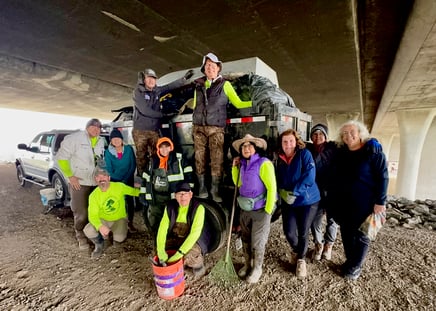
Yes. Our mission has always been to protect and restore the waterways of the Sacramento region. Trash removal was the
essential first step and it's still ongoing. But now that we've made real progress, we're moving into phase two: removing invasive species. Eventually the goal is restoration of native plants and habitat.
That said, we're also realistic. We could do this for 50 years and if people are still living along the rivers without support, it's an uphill battle. So part of our work now is advocating for public agencies to take responsibility for keeping these areas clear. The water doesn't belong to anyone, which means for a long time it belonged to no one. We're trying to change that.
What advice would you give someone who wants to attend their first event?
Just come out and see. You'll meet some genuinely wonderful people. We make the events fun because we have to. The work can be hard and sweaty and discouraging, so you've got to keep a sense of humor about it. A lot of people show up thinking they can't really handle it, and then they try, feel welcomed, get joked around with, and come back again and again. Some of them come back just for the camaraderie. And you get stronger as you keep doing it.
How can people support RCWA?
Donations are always needed. We're a nonprofit and the money goes directly to tools, supplies, dump runs, or maintenance items like tires on our truck. But beyond our organization, we'd love to see people take action in their own communities. That's literally how this started. A few neighbors picking up trash together, making it a social thing. Almost four million pounds later, it's changing Sacramento. Individuals really can make this happen. When you work together, it's remarkable what's possible.
To learn more about the River City Waterway Alliance, follow their events, or donate to their mission, visit their website at https://rivercitywaterwayalliance.org/
.jpeg?width=585&height=439&name=Photo%20May%2025%202026%2c%2012%2037%2030%20PM%20(3).jpeg)
.jpeg?width=605&height=454&name=Photo%20May%2025%202026%2c%2012%2037%2030%20PM%20(4).jpeg)