
This month, we sat down with Deb, founder of Don't Trash Dover, to learn how eight years of showing...
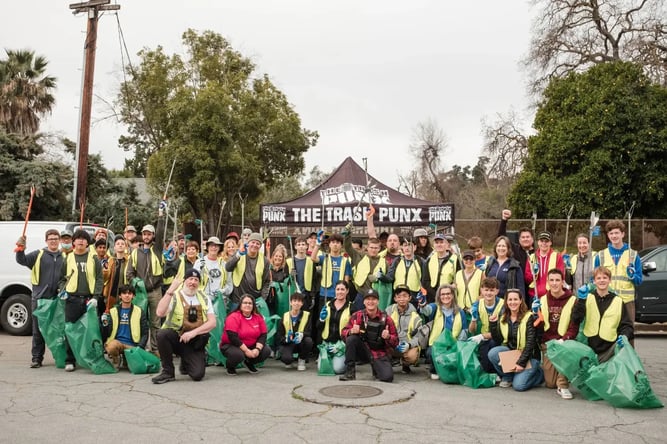
This month, we sat down with Justin and Vanessa, part of the team behind The Trash Punx, to learn how a frustration with illegal dumping in San Jose grew into a nonprofit running cleanup events from California all the way to Kenya.
Tell us a little about The Trash Punx and how it got started.
We started The Trash Punx in 2017 as our answer to all the illegal dumping and trash that kept piling up in San Jose. I was born and raised here, and I was tired of seeing trash get worse and worse on my commute into downtown. San Jose has so much going for it -- the diversity, the culture -- but the one thing it lacked was support for the environment. I wanted to create something fun and easy for kids and adults to do on a weekend, and now, almost ten years in, we've got corporate groups, retirees, basically everybody getting involved on weekdays too.
It was never supposed to get this big. I just wanted to do one cleanup a month in the summer and call it a day. But the need here was so massive that we kept making connections, and about two years in we became an official nonprofit, which honestly felt like a small miracle.
How often do you and your volunteers hold cleanup events?
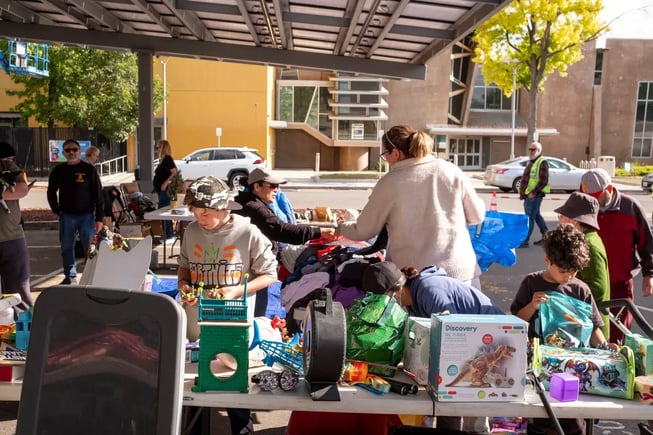
At least twice a month, though we run a real variety of events. There are the environmental cleanups, the creek cleanups, neighborhood and street cleanups. We also do free e-waste collection events, where we partner with city council members to make sure electronics get recycled properly instead of landfilled. We run something called a Free Market, which is basically a flea market where everything is free. That concept has really caught on and keeps growing.
On top of that, we do a lot of school and Rotary club presentations focused on education, because people genuinely don't always know what to do with certain items, or they believe myths about recycling that just aren't true. And then there's our international program. About two years ago we started an upcycling center in Kenya, after the community there reached out asking for help with their plastic waste. There's no trash service at all there, so we've worked with them on solutions like turning plastic into fence posts, roof tiles, and school benches.
What challenges do your volunteers run into, and how do you handle them?
I think the biggest frustration is the sense that trash just keeps coming back. Volunteers will clean up 1,200 pounds of trash from one spot and then it's right back the next month. Some of that comes from people who just don't want to pay the dump fee, so they dump illegally instead since there's no real enforcement. Some of it comes from our unhoused population, who get asked to move from one spot and just leave their belongings behind.
We try not to focus on placing blame for where the trash comes from. We just clean it up. Groups like River City Waterway Alliance up in Sacramento do the same thing, working respectfully with unhoused communities to clear out structures with permission.
Have you noticed changes in how residents treat these areas since you started?
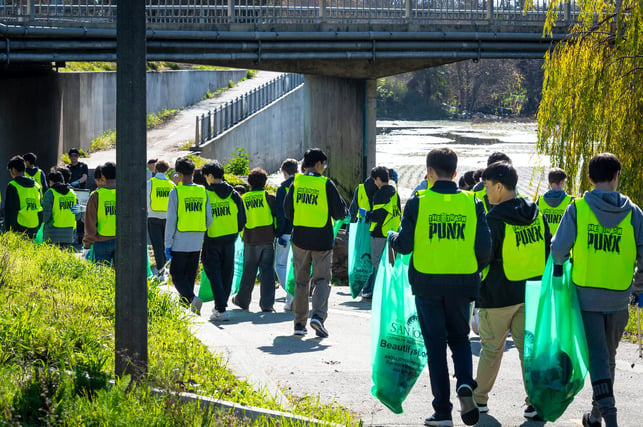
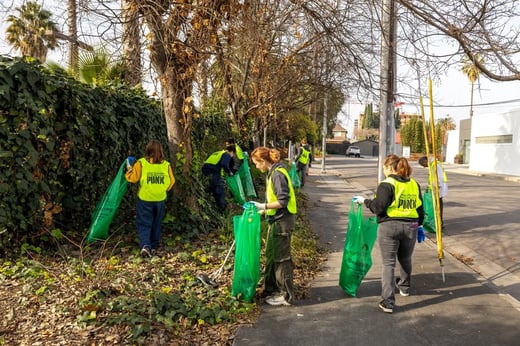 Definitely, especially around the Guadalupe River Park here in San Jose. That area used to be a dumping ground, not just from the encampments along it but from illegal dumpers leaving construction debris and all kinds of other stuff. It's so much cleaner now. People are biking, scootering, running on that trail, and that's thanks to all the creek partners working together, including a group called Valley Water.
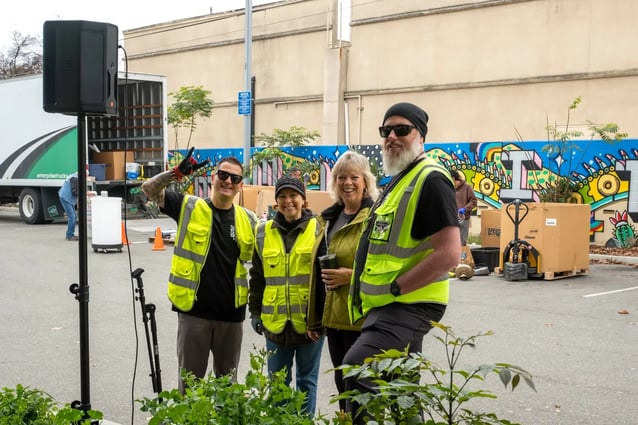
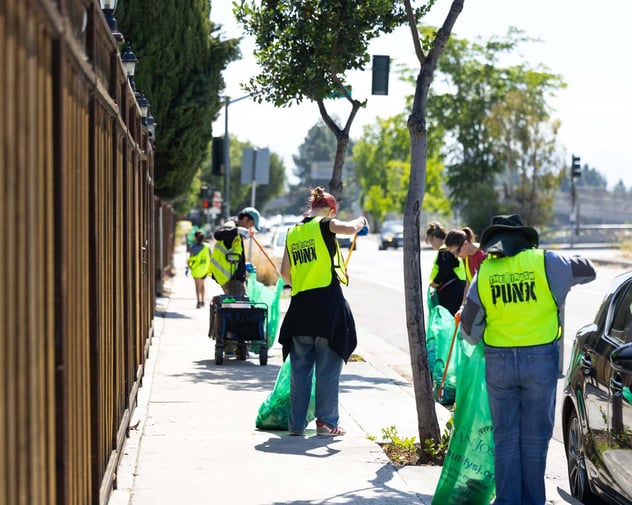
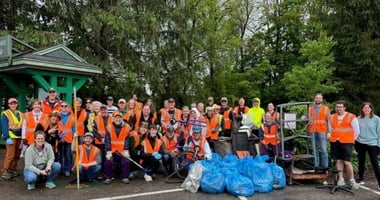
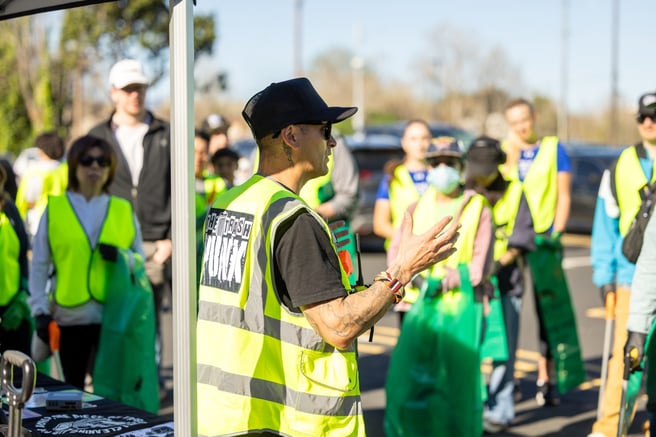
We also see it on a smaller scale. We just had an event in a neighborhood called Buena Vista where only one resident showed up out of all our 25 volunteers, but that one person is going to talk about how good it felt and how easy it was. People see our bright yellow vests and start asking questions. That stewardship is spreading, especially with younger volunteers who are looking for meaningful experiences instead of going out to bars and clubs.
Do you track the specific types of trash or items you collect?
For general cleanups we track volunteer count, volunteer hours, and pounds of trash collected. For e-waste events specifically, we track CRTs, tablets, cell phones, batteries, wire, printers, all of it. In Kenya, our team tracks plastic waste, general rubbish, and even raw sewage data, which is rough, but important for understanding where resources need to go. They're doing those cleanups by hand. We brought litter sticks the first time we visited, and some people use them, but most prefer using gloves and their hands because it's faster.
What would you say to someone who thinks one person can't make a difference?
 I think it comes down to having real conversations with people and showing them what a small group, or even one
dedicated person, can start and how it snowballs from there. You can only show somebody so much. They have to be willing to see it for themselves. The man who started our program in Kenya was just one guy, and now hundreds of volunteers show up every month.
I've also had people tell me, “Honestly, I love what you're doing but I don't like picking up trash.” And that's fine. You can share a post, subscribe to the newsletter, tell a friend. Or if you come to an event, there's a job for everyone. We always need someone to manage the coffee and donuts. If someone isn't mobile or gets dizzy easily, there's still a way for them to be part of it.
How can communities reduce litter before it even happens?
Education, hands down. San Jose has a program called 311 that offers free junk pickup, and a lot of people just don't know it exists. That's a real bummer because it keeps mattresses and construction debris out of the waterways and out of neighborhoods entirely. We talk about it at our presentations and at our events whenever it comes up.
We're really intentional about targeting elementary and middle schools with our outreach, because those kids go home and educate their parents and grandparents. Things like, “hey grandpa, batteries don't go in the recycling bin anymore, they need to go to Staples or Home Depot or they can cause fires.” Things have changed a lot, and kids are often the ones who carry that message home. We also work with school clubs and scout troops, to help them run their own events and teach their peers.
What safety tips do you share with volunteers at every event?
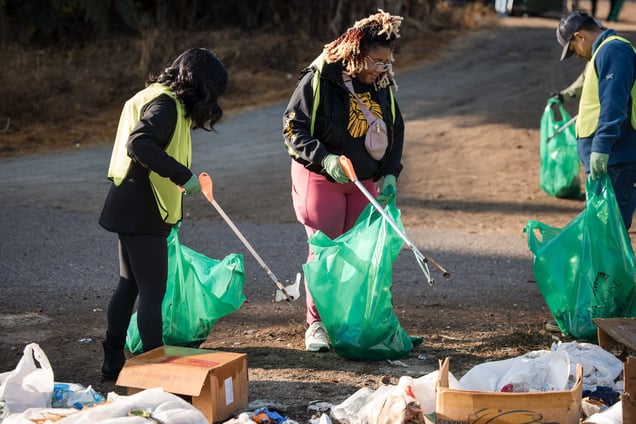
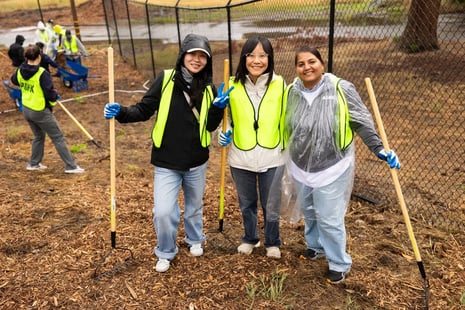
Grab a vest, gloves, and a litter stick. Don't pick up anything you're not comfortable with, just flag a team leader. We always say "when," not "if," you'll come across a needle or something sharp, because it happens. We have sharps containers and our team is trained to handle that safely.
San Jose asks us to put everything, even recyclable items, into one green bag, because their facility sorts it all afterward. The priority is getting it off the street during the limited time volunteers have. Batteries and sharps are the exceptions, those get separated. We also run in groups with team leaders carrying radios, and if anyone finds something dangerous like a weapon, the rule is simple: don't touch it, call it in, stand by until it's handled. And we always tell people to stay back from the water and let a team leader handle anything close to the edge.
Where do you see The Trash Punx heading in the future?
I want to keep growing our global program. There are communities out there facing real hardship because of corrupt or absent local government, and we want to be a catalyst for them the way we've been able to be here. I also want to keep expanding our local stewardship program, which is about giving other groups the tools to run their own cleanups rather than us trying to do everything ourselves.
We're not trying to put a Trash Punx in every city. What works here might not work in Minnesota. We'd rather see more groups like River City Waterway Alliance or South Bay Clean Creeks Coalition pop up and do the work in their own communities, in their own way.
How can people support your mission?
If you're local to the Bay Area in California, the easiest way is to just come to a volunteer event. Share our videos, we have a lot of great educational content on TikTok and Instagram. And of course, funding helps a lot. We're really transparent about where our money goes. You can go on our website and see exactly how funds are spent, and 100% goes back into the community. We also just partnered with Roundup.org, so people can round up their everyday purchases to the nearest dollar and donate the difference straight to us.
We also can’t forget the Free Market. Come check it out and see that the stuff really is free, and it's good stuff, not junk. It keeps things out of the landfill and gets useful items into the hands of people who need them. If you've got things piling up in your garage, save them for one of our events instead of throwing them away.
The local stewardship program is another great way to get involved. We can't personally clean every neighborhood that asks us to, so instead we hand over the tools and training so a neighborhood association or group of friends can do it themselves. That ownership is what matters most. We can equip people, but they have to be the ones to make it happen, otherwise the area just gets dirty again.
To learn more about The Trash Punx, find an upcoming cleanup, or get involved with their local stewardship or international programs, visit https://www.thetrashpunx.org/.